Buy nachtzug.eu ?
We are moving the project
nachtzug.eu .
Are you interested in purchasing the domain
nachtzug.eu ?
domain@kv-gmbh.de · 0541-91531010
Buy nachtzug.eu ?
What is the difference between standard enthalpy of formation, enthalpy of formation, and reaction enthalpy?
The standard enthalpy of formation is the enthalpy change that occurs when one mole of a compound is formed from its elements in their standard states. Enthalpy of formation is the enthalpy change that occurs when one mole of a compound is formed from its elements in their standard states, but it can be under non-standard conditions. Reaction enthalpy is the enthalpy change that occurs in a chemical reaction, which can be exothermic (heat is released) or endothermic (heat is absorbed). **
What is enthalpy?
Enthalpy is a thermodynamic property of a system that represents the total energy of the system, including its internal energy and the energy required to maintain constant pressure. It is often denoted as H and is expressed in units of joules. Enthalpy is important in understanding and analyzing processes such as chemical reactions and phase changes, as it provides a measure of the heat content of a system. In practical terms, enthalpy change is often used to quantify the heat absorbed or released during a process at constant pressure. **


Similar search terms for Enthalpy
Top-Angebote
Products related to Enthalpy:
-
ELEMIS Peptide4 Overnight Radiance Peel 30mlFighting the visible signs of tired, dull skin, ELEMIS Peptide4 Overnight Radiance Peel helps to lock in essential hydration whilst cooling and refreshing the skin. Protecting the skin from damaging environmental aggressors, Speedwell Extract which is a natural source of antioxidants and soothing actives rejuvenates the skin resulting in a well-rested and refreshed complexion. Wake up to plump, refreshed and more youthful skin. Clinically proven to lock in moisture for up to 24 hours* 100% agreed this left their skin plumped with hydration** 98% agreed this left their skin looking refreshed and well-rested in the morning** 95% agreed this made them feel like they had 8 hours of beauty sleep** 94% agreed this left them feeling like they had an overnight facial** *Independent Clinical Trials 2019. TEWL Study. Results based on 16 people over 24 hours. **Independent User Trials 2019. Results based on 120 people over 2 weeks. Ingredients Aqua/Water/Eau, PEG-8, Dicaprylyl Carbonate, Glycerin, Diheptyl Succinate, Capryloyl Glycerin/Sebacic Acid Copolymer, Sodium Polyacrylate, Phenoxyethanol, Hydroxyacetophenone, Fragrance (Parfum), Disodium EDTA, Chondrus Crispus Extract, Buglossoides Arvensis (Star AvensisTM) Seed Oil, Benzyl Benzoate, Glyceryl Acrylate/Acrylic Acid Copolymer, Benzyl Alcohol, Linalool, Maltodextrin, Limonene, Lithothamnion Calcareum Extract, Tocopherol, Veronica Officinalis (Speedwell) Flower/Leaf/Stem Extract, Hexyl Cinnamal, Dehydroacetic Acid, Nyctanthes Arbor-Tristis (Indian Night Jasmine) Flower Extract, Cananga Odorata Flower Oil, Citrus Aurantium Dulcis (Orange) Peel Oil, Myristica Fragrans (Nutmeg) Kernel Oil, Gardenia Florida Fruit Extract, Hydrolyzed Yeast Protein, Sodium Benzoate, Citric Acid, Citrus Aurantium Amara (Bitter Orange) Leaf/Twig Oil, Citrus Aurantium Amara (Bitter Orange) Peel Oil, Coriandrum Sativum (Coriander) Fruit Oil, Benzoic Acid, Ethylhexylglycerin.57,60 £*Shipping: 0,00 £Secure redirect to the provider
-
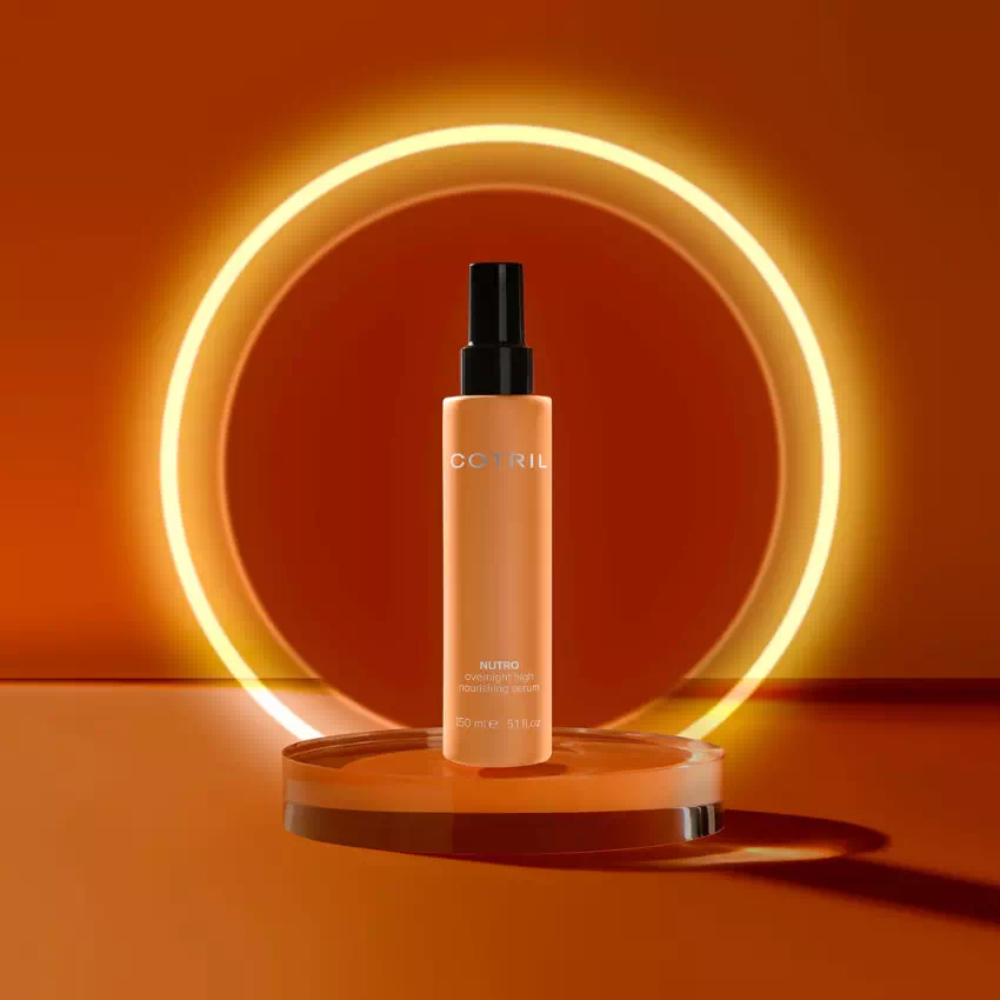
Cotril Nutro Overnight Nourishing Serum 150mLA facial serum. It an ultra-nourishing serum designed for nighttime application. It deeply nourishes hair, leaving it visibly shinier, softer, and more vibrant by morning, while effectively combating frizz. The lightweight texture ensures a pleasant application, making it suitable for all hair types.21,85 £*Shipping: 5,22 £Secure redirect to the provider
-
Beter 8 Overnight rollers, 44 mmHealth and Beauty Hair Accessories Beter 8 Overnight rollers, 44 mm Good morning, lovely hair! Cuddly rollers working while you rest. Ideal for styling hair overnight, sleep comfortably and wake up with a lovely hair!5,17 £*Shipping: 3,99 £Secure redirect to the provider
-
Uplift Essentials Insulated Overnight Oat Container blueOptimize your morning routine with this highperformance Overnight Oat Container, a highfidelity storage solution engineered for modern meal prep. Designed for versatile use, this 600ML insulated oatmeal cup is microwaveable, allowing you to...62,97 $*Shipping: 0,00 $Secure redirect to the provider



-
What is the difference between bond enthalpy and formation enthalpy?
Bond enthalpy is the energy required to break a specific chemical bond in a molecule, while formation enthalpy is the energy change when one mole of a compound is formed from its elements in their standard states. Bond enthalpy is specific to a particular bond within a molecule, while formation enthalpy is a measure of the overall energy change in forming a compound. Bond enthalpy is typically measured in kilojoules per mole (kJ/mol), while formation enthalpy is also measured in kilojoules per mole (kJ/mol). **
-
What is Hess's law for standard formation enthalpy and combustion enthalpy?
Hess's law states that the total enthalpy change for a reaction is the same regardless of the number of steps taken to reach the final products. This principle can be applied to standard formation enthalpies and combustion enthalpies by using a series of known enthalpy changes to calculate the overall enthalpy change for a reaction. By manipulating and combining these known enthalpies, Hess's law allows us to determine the enthalpy change for reactions that may not be easily measured directly. **
-
What is the difference between standard formation enthalpy and enthalpy change?
Standard formation enthalpy is the enthalpy change that occurs when one mole of a compound is formed from its elements in their standard states. It is a specific type of enthalpy change that is measured under standard conditions. Enthalpy change, on the other hand, is a more general term that refers to the overall change in enthalpy of a system during a chemical reaction or process, regardless of whether it involves formation of a compound or not. Enthalpy change can be positive (endothermic) or negative (exothermic), depending on whether energy is absorbed or released during the process. **
-
How to calculate the reaction enthalpy from the molar bond enthalpy?
To calculate the reaction enthalpy from the molar bond enthalpy, you need to consider the difference between the sum of the bond enthalpies of the reactants and the sum of the bond enthalpies of the products. First, calculate the total bond enthalpy of all the bonds broken in the reactants, and then calculate the total bond enthalpy of all the bonds formed in the products. The reaction enthalpy is then the difference between these two values, with the bond enthalpies of the products subtracted from the bond enthalpies of the reactants. This calculation allows you to determine whether a reaction is exothermic (releasing heat) or endothermic (absorbing heat). **


What is Hess's law equation for standard formation enthalpy and combustion enthalpy?
Hess's law states that the overall enthalpy change for a reaction is the same regardless of the number of steps taken to reach the final products. For standard formation enthalpy, the equation is: ∆Hf°(products) = ∑∆Hf°(products) - ∑∆Hf°(reactants). For combustion enthalpy, the equation is: ∆Hcomb° = ∑∆Hf°(products) - ∑∆Hf°(reactants). These equations allow us to calculate the enthalpy change of a reaction using the enthalpies of formation of the reactants and products. **
What is the difference between standard enthalpy of formation and enthalpy change?
The standard enthalpy of formation is the enthalpy change that occurs when one mole of a compound is formed from its elements in their standard states. It is a specific type of enthalpy change that is measured under standard conditions. On the other hand, enthalpy change refers to the overall change in enthalpy of a system during a chemical reaction or process, which can include various types of enthalpy changes such as enthalpy of reaction, enthalpy of combustion, or enthalpy of solution. In summary, standard enthalpy of formation is a specific type of enthalpy change that relates to the formation of a compound from its elements, while enthalpy change is a broader term that encompasses various types of enthalpy changes in a system. **
Top-Angebote
Products related to Enthalpy:
-
Trilogy Age-Proof Overnight Mask 60mlIndulgent and hydrating, this leave-on mask is enriched with advanced natural ingredients and vitamins that work to support the skin's night-time repair functions with prolonged overnight wear. Helping nourish, firm and promote radiance, the formula's enriched with jojoba derived super-ingredient L22® which mimics the youthful skin lipid profile of a 22- year-old, potent botanical complex Glycablend™ for reduced collagen breakdown and vitamin C to promote radiance. • Vegan • Artificial fragrance free • Artificial colour free • Gluten free** • Dairy free*** *Alcohol free: Refers to free from ethanol (ethyl alcohol) **Gluten free: Some Trilogy products contain cetearyl wheat straw glycosides and/or wheat germ oil which may contain traces of gluten ***dairy free: Includes free from dairy derived ingredients Trilogy are updating their brand logo and packaging, please be aware packaging is subject to change.32,50 £*Shipping: 0,00 £Secure redirect to the provider
-
ELEMIS Peptide4 Overnight Radiance Peel 30mlFighting the visible signs of tired, dull skin, ELEMIS Peptide4 Overnight Radiance Peel helps to lock in essential hydration whilst cooling and refreshing the skin. Protecting the skin from damaging environmental aggressors, Speedwell Extract which is a natural source of antioxidants and soothing actives rejuvenates the skin resulting in a well-rested and refreshed complexion. Wake up to plump, refreshed and more youthful skin. Clinically proven to lock in moisture for up to 24 hours* 100% agreed this left their skin plumped with hydration** 98% agreed this left their skin looking refreshed and well-rested in the morning** 95% agreed this made them feel like they had 8 hours of beauty sleep** 94% agreed this left them feeling like they had an overnight facial** *Independent Clinical Trials 2019. TEWL Study. Results based on 16 people over 24 hours. **Independent User Trials 2019. Results based on 120 people over 2 weeks. Ingredients Aqua/Water/Eau, PEG-8, Dicaprylyl Carbonate, Glycerin, Diheptyl Succinate, Capryloyl Glycerin/Sebacic Acid Copolymer, Sodium Polyacrylate, Phenoxyethanol, Hydroxyacetophenone, Fragrance (Parfum), Disodium EDTA, Chondrus Crispus Extract, Buglossoides Arvensis (Star AvensisTM) Seed Oil, Benzyl Benzoate, Glyceryl Acrylate/Acrylic Acid Copolymer, Benzyl Alcohol, Linalool, Maltodextrin, Limonene, Lithothamnion Calcareum Extract, Tocopherol, Veronica Officinalis (Speedwell) Flower/Leaf/Stem Extract, Hexyl Cinnamal, Dehydroacetic Acid, Nyctanthes Arbor-Tristis (Indian Night Jasmine) Flower Extract, Cananga Odorata Flower Oil, Citrus Aurantium Dulcis (Orange) Peel Oil, Myristica Fragrans (Nutmeg) Kernel Oil, Gardenia Florida Fruit Extract, Hydrolyzed Yeast Protein, Sodium Benzoate, Citric Acid, Citrus Aurantium Amara (Bitter Orange) Leaf/Twig Oil, Citrus Aurantium Amara (Bitter Orange) Peel Oil, Coriandrum Sativum (Coriander) Fruit Oil, Benzoic Acid, Ethylhexylglycerin.57,60 £*Shipping: 0,00 £Secure redirect to the provider
-
Cotril Nutro Overnight Nourishing Serum 150mLA facial serum. It an ultra-nourishing serum designed for nighttime application. It deeply nourishes hair, leaving it visibly shinier, softer, and more vibrant by morning, while effectively combating frizz. The lightweight texture ensures a pleasant application, making it suitable for all hair types.21,85 £*Shipping: 5,22 £Secure redirect to the provider
-
What is the difference between standard enthalpy of formation, enthalpy of formation, and reaction enthalpy?
The standard enthalpy of formation is the enthalpy change that occurs when one mole of a compound is formed from its elements in their standard states. Enthalpy of formation is the enthalpy change that occurs when one mole of a compound is formed from its elements in their standard states, but it can be under non-standard conditions. Reaction enthalpy is the enthalpy change that occurs in a chemical reaction, which can be exothermic (heat is released) or endothermic (heat is absorbed). **
-
What is enthalpy?
Enthalpy is a thermodynamic property of a system that represents the total energy of the system, including its internal energy and the energy required to maintain constant pressure. It is often denoted as H and is expressed in units of joules. Enthalpy is important in understanding and analyzing processes such as chemical reactions and phase changes, as it provides a measure of the heat content of a system. In practical terms, enthalpy change is often used to quantify the heat absorbed or released during a process at constant pressure. **
-
What is the difference between bond enthalpy and formation enthalpy?
Bond enthalpy is the energy required to break a specific chemical bond in a molecule, while formation enthalpy is the energy change when one mole of a compound is formed from its elements in their standard states. Bond enthalpy is specific to a particular bond within a molecule, while formation enthalpy is a measure of the overall energy change in forming a compound. Bond enthalpy is typically measured in kilojoules per mole (kJ/mol), while formation enthalpy is also measured in kilojoules per mole (kJ/mol). **
-
What is Hess's law for standard formation enthalpy and combustion enthalpy?
Hess's law states that the total enthalpy change for a reaction is the same regardless of the number of steps taken to reach the final products. This principle can be applied to standard formation enthalpies and combustion enthalpies by using a series of known enthalpy changes to calculate the overall enthalpy change for a reaction. By manipulating and combining these known enthalpies, Hess's law allows us to determine the enthalpy change for reactions that may not be easily measured directly. **
Similar search terms for Enthalpy
-
Beter 8 Overnight rollers, 44 mmHealth and Beauty Hair Accessories Beter 8 Overnight rollers, 44 mm Good morning, lovely hair! Cuddly rollers working while you rest. Ideal for styling hair overnight, sleep comfortably and wake up with a lovely hair!5,17 £*Shipping: 3,99 £Secure redirect to the provider
-
Uplift Essentials Insulated Overnight Oat Container blueOptimize your morning routine with this highperformance Overnight Oat Container, a highfidelity storage solution engineered for modern meal prep. Designed for versatile use, this 600ML insulated oatmeal cup is microwaveable, allowing you to...62,97 $*Shipping: 0,00 $Secure redirect to the provider
-
Pariderm Boost Glow Overnight Brightener Serum 50mLA facial serum for dark spots and uneven skin tone. Visibly brighter skin by morning. Reduces imperfections and dark spots. Unifies and evens out skin tone. Light, non-greasy, fast-absorbing texture. Suitable for all skin types. Glycolic Acid: Exfoliates dead skin cells, promoting cell turnover and improving skin texture.23,73 £*Shipping: 5,22 £Secure redirect to the provider
-
Trilogy Age-Proof Overnight Mask 60mlIndulgent and hydrating, this leave-on mask is enriched with advanced natural ingredients and vitamins that work to support the skin's night-time repair functions with prolonged overnight wear. Helping nourish, firm and promote radiance, the formula's enriched with jojoba derived super-ingredient L22® which mimics the youthful skin lipid profile of a 22- year-old, potent botanical complex Glycablend™ for reduced collagen breakdown and vitamin C to promote radiance. • Vegan • Artificial fragrance free • Artificial colour free • Gluten free** • Dairy free*** *Alcohol free: Refers to free from ethanol (ethyl alcohol) **Gluten free: Some Trilogy products contain cetearyl wheat straw glycosides and/or wheat germ oil which may contain traces of gluten ***dairy free: Includes free from dairy derived ingredients Trilogy are updating their brand logo and packaging, please be aware packaging is subject to change.32,50 £*Shipping: 0,00 £Secure redirect to the provider
-
What is the difference between standard formation enthalpy and enthalpy change?
Standard formation enthalpy is the enthalpy change that occurs when one mole of a compound is formed from its elements in their standard states. It is a specific type of enthalpy change that is measured under standard conditions. Enthalpy change, on the other hand, is a more general term that refers to the overall change in enthalpy of a system during a chemical reaction or process, regardless of whether it involves formation of a compound or not. Enthalpy change can be positive (endothermic) or negative (exothermic), depending on whether energy is absorbed or released during the process. **
-
How to calculate the reaction enthalpy from the molar bond enthalpy?
To calculate the reaction enthalpy from the molar bond enthalpy, you need to consider the difference between the sum of the bond enthalpies of the reactants and the sum of the bond enthalpies of the products. First, calculate the total bond enthalpy of all the bonds broken in the reactants, and then calculate the total bond enthalpy of all the bonds formed in the products. The reaction enthalpy is then the difference between these two values, with the bond enthalpies of the products subtracted from the bond enthalpies of the reactants. This calculation allows you to determine whether a reaction is exothermic (releasing heat) or endothermic (absorbing heat). **
-
What is Hess's law equation for standard formation enthalpy and combustion enthalpy?
Hess's law states that the overall enthalpy change for a reaction is the same regardless of the number of steps taken to reach the final products. For standard formation enthalpy, the equation is: ∆Hf°(products) = ∑∆Hf°(products) - ∑∆Hf°(reactants). For combustion enthalpy, the equation is: ∆Hcomb° = ∑∆Hf°(products) - ∑∆Hf°(reactants). These equations allow us to calculate the enthalpy change of a reaction using the enthalpies of formation of the reactants and products. **
-
What is the difference between standard enthalpy of formation and enthalpy change?
The standard enthalpy of formation is the enthalpy change that occurs when one mole of a compound is formed from its elements in their standard states. It is a specific type of enthalpy change that is measured under standard conditions. On the other hand, enthalpy change refers to the overall change in enthalpy of a system during a chemical reaction or process, which can include various types of enthalpy changes such as enthalpy of reaction, enthalpy of combustion, or enthalpy of solution. In summary, standard enthalpy of formation is a specific type of enthalpy change that relates to the formation of a compound from its elements, while enthalpy change is a broader term that encompasses various types of enthalpy changes in a system. **
* All prices are inclusive of VAT and, if applicable, plus shipping costs. The offer information is based on the details provided by the respective shop and is updated through automated processes. Real-time updates do not occur, so deviations can occur in individual cases. ** Note: Parts of this content were created by AI.